Quick answer
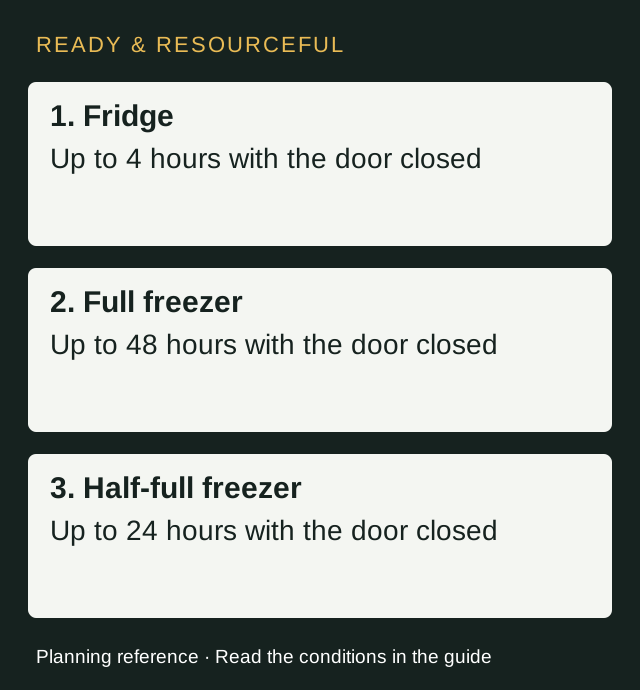
With doors kept closed, the CDC says refrigerated food can remain safe for up to four hours without power. A full freezer can hold safe temperatures for about 48 hours, or 24 hours if half full. Those numbers depend on the stated conditions; they are not a guarantee for an appliance that was already too warm. Use the actual outage history, available temperature information, and official food-specific guidance. Never taste questionable food to check its safety.
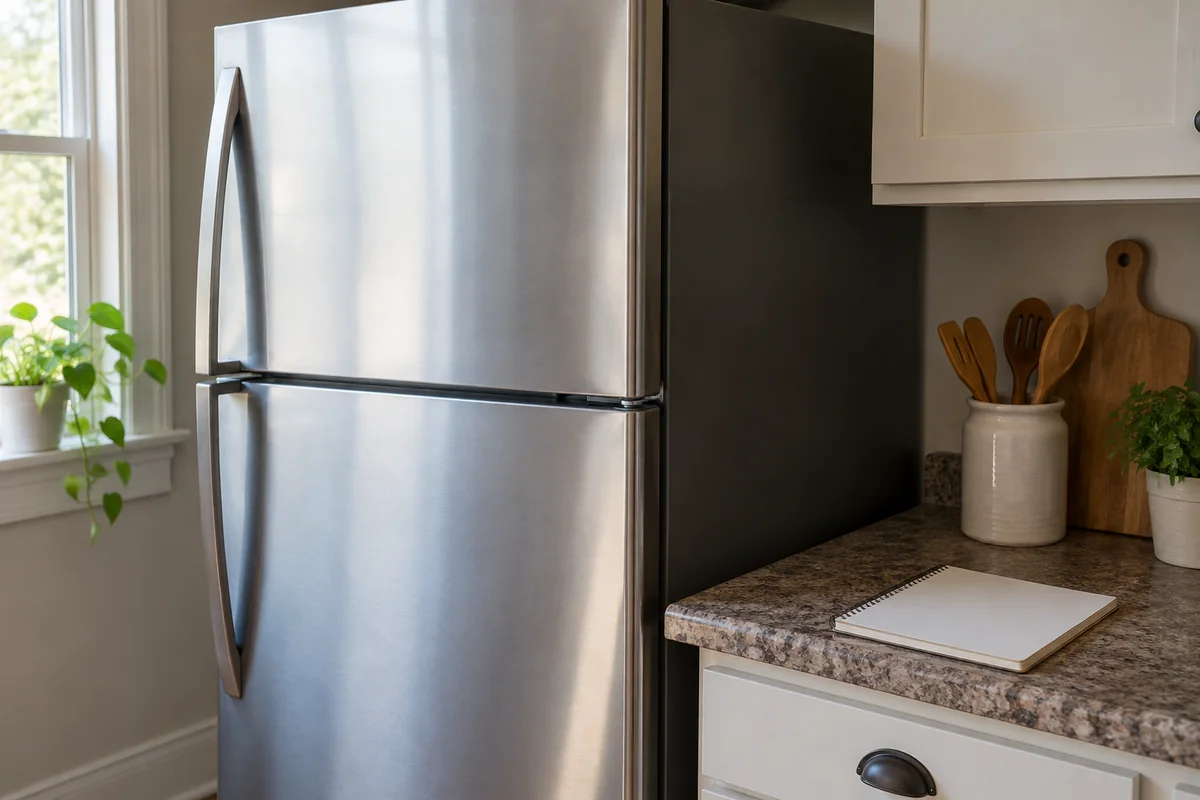
Throwing away groceries hurts, especially when the power comes back and the fridge looks ordinary again. But appearance cannot tell you what happened while it was off. My approach here is to keep the decision tied to the outage record, available temperature information and official food-specific guidance. We will also cover the everyday work around that decision: finding the reference, eating something else and replacing what you need.
The closed-door time limits
The CDC emergency food-safety guidance gives these reference limits when the doors remain closed:
- Refrigerator: up to four hours.
- Full freezer: about 48 hours.
- Half-full freezer: about 24 hours.
CDC recommends appliance thermometers, with the refrigerator at 40°F or below and the freezer at 0°F or below. These normal storage temperatures help explain why a usual control setting is not the same as a measured condition.
Keep the numbers with their context. An appliance opened repeatedly, an uncertain outage start, or food already stored too warm introduces information that the simple headline cannot resolve. Do not use the longest number merely because it offers the most reassuring answer.
What to do as soon as power fails
Keep the refrigerator and freezer doors closed. Note when you noticed the interruption and whether that is also the known start time. Put the note where the household can find it without needing a phone.
Tell everyone to leave the fridge and freezer doors closed. Otherwise, each person may open the door to check whether the light is back, without realizing somebody else just did the same thing. Choose a meal or snack that does not require opening the cold storage. A quick household conversation is more useful than discovering later that everyone had a different plan.
Check current utility information for planning, but do not treat a restoration estimate as evidence about the food. The estimate may change, and it does not tell you the temperature of a particular item.
Keep people and wider household safety ahead of groceries. If conditions require relocation, use your departure plan. Our apartment power outage checklist covers lighting, communication, and access concerns alongside the food task.
Four hours without power is not the same as every food’s exposure limit
The refrigerator’s closed-door holding estimate and the food-specific temperature rules answer different questions. One concerns the appliance during an outage; the other concerns a particular food’s exposure and handling. Do not replace either with a vague statement that “everything has four hours.”
The FoodSafety.gov refrigerated-food chart lists decisions for items exposed to temperatures of 40°F or above for more than two hours. It separates categories such as meat, dairy, fruit, sauces, grains, and vegetables. Find the actual item and stated condition rather than copying an adjacent row.
That chart is useful because the fridge contains very different products. A package label or food category may change what guidance applies. Keep the original reference available instead of creating your own universal rule from a few examples.
Use a short record, not a complicated worksheet
You only need enough information to distinguish known facts from guesses. A useful record has the discovery time, known start time if available, appliance, available temperature information, relevant action, and replacement needs.
Write “unknown” if you do not know when the outage began. Leaving the space blank can make it tempting to fill in a reassuring guess later. An honest record gives everyone the same information to work with, even when some of it is missing. Do not turn uncertainty into a convenient start time simply because you want to keep the groceries.
If a reading is obtained, record the time as well as the value. Do not repeatedly open an unpowered appliance just to create more entries. The record should support the official guidance rather than interfere with keeping the doors closed.
Use ordinary paper and a pen if that is easiest. A digital log is optional. A method that depends on an account, connection, or charged device can introduce avoidable friction during the interruption.
Prepare a cold-storage backup before you need it
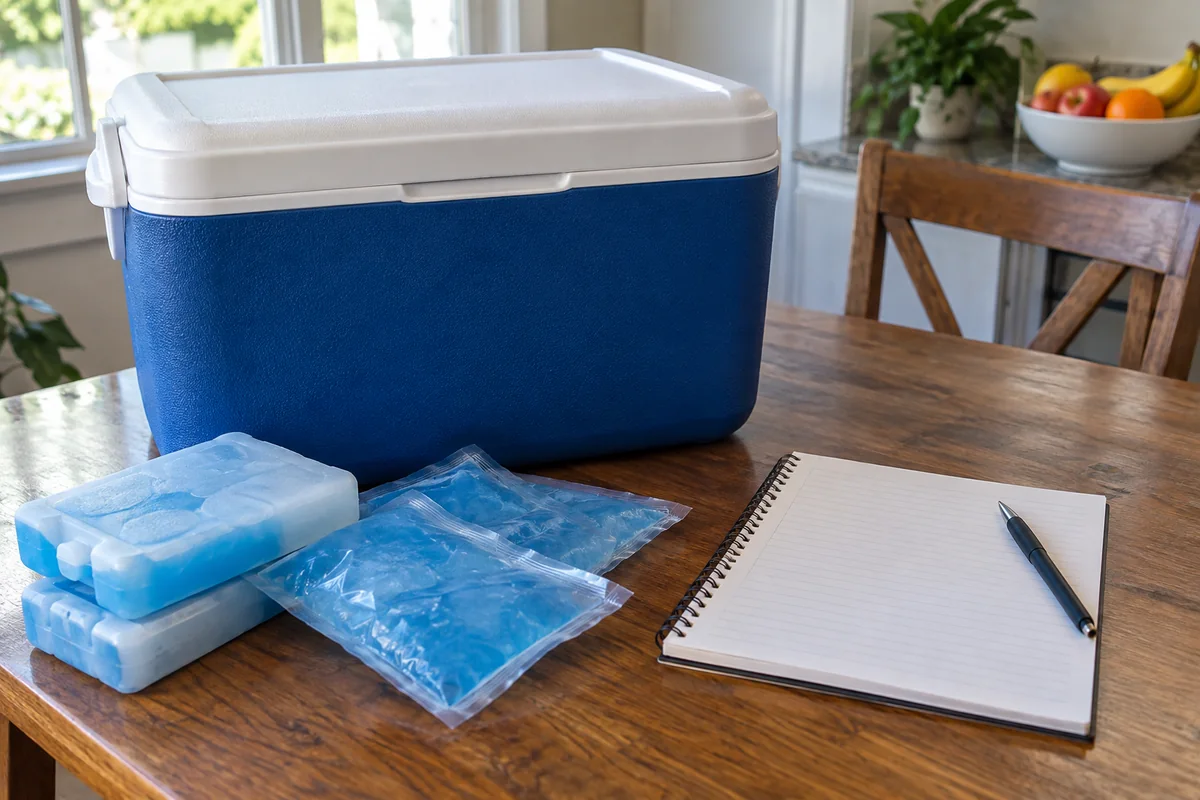
Have an appropriate cooler and cold source available if that fits your household. CDC describes moving refrigerated perishables into a cooler with ice or another cold source after four hours, maintaining 40°F or below. Follow the complete guidance rather than assuming that moving food into any cooler makes it safe.
Consider where the cooler will be used, how it will remain accessible, and whether it is clean and ready. A large container wedged behind storage boxes may be difficult to retrieve during a blackout.
Choose the arrangement before a forecast disruption. Identify where approved cold supplies can be obtained, but remember that shops and transport may be affected too. A backup plan should record uncertainties instead of treating availability as assured.
For dry ice or other specialist cold supplies, follow supplier safety instructions and official guidance. Do not improvise handling or sealed-storage methods from a casual tip. A general planning article cannot replace the relevant precautions.
Returning home to an unpowered refrigerator
If you were away, record when you discovered the outage separately from when it began. Ask whether a reliable household record exists. A message from another person can be relevant, but note what it actually establishes.
Do not turn an unknown timeline into a known one based on the appearance of food or the fact that a drink still feels cool. Apply official guidance to the available facts and preserve what remains uncertain.
Separate the food decision from the inconvenience. You may need to arrange a meal, replace groceries, or contact a housemate, but those tasks do not determine whether an item stayed safely stored.
This is also a useful preparation lesson. If the outage is often discovered late, consider how household communication and access to an official reference can improve. Avoid assuming that buying a smart appliance automatically resolves every question about individual food conditions.
Assess frozen food separately
A full freezer and a half-full freezer have different closed-door reference times. Note which situation applies; do not use the full-freezer estimate simply because the door is shut.
The FoodSafety.gov frozen-food chart distinguishes foods still containing ice crystals or kept at 40°F or below from foods exposed above that temperature. It also includes item-specific exceptions and quality considerations. Follow the actual row, not a blanket refreezing claim.
When the power returns, the appliance beginning to cool again does not undo the previous exposure. Check the official guidance before assuming everything can remain in place for the next week.
Keep food labels available where practical. If you cannot identify what a frozen container holds, it is harder to find the applicable guidance. Ordinary labelling before an emergency helps with this task as well as everyday meal planning.
Do not rely on tasting, smell, or reheating as a rescue plan
Never taste food to determine whether it is safe. A normal appearance or smell does not establish a safe time-and-temperature history. The USDA emergency food guidance provides an additional official reference for handling decisions.
Avoid making a meal from uncertain food simply because cooking feels like a way to fix the problem. Follow the item-specific discard guidance. Do not invent a heating procedure to override a decision to discard.
Treat flood exposure as a separate hazard. If food or packaging has contacted floodwater, use the official flood-related instructions rather than applying only the power-outage time limits. Packaging type and condition matter in those instructions.
If you cannot establish the relevant conditions, follow the cautious official direction. Do not seek a reassuring answer by asking several people until somebody says the food is probably fine.
A household example with a known timeline
Suppose a household member notices the power interruption while at home and writes down the time. The refrigerator doors remain closed, and the household uses pantry food while waiting. Later, they consult the official reference with that known timeline and any relevant temperature information.
The value of this example is the sequence, not a prewritten keep-or-discard outcome. Different foods and conditions still require the applicable chart. A recorded start time helps choose the correct guidance; it does not replace it.
Assign one person to keep the reference and notes together. Other people can then see what was recorded rather than opening the refrigerator or starting a second conflicting log.
Afterward, review whether the practical supplies were available: pen, reference, suitable backup food, and any planned cooler arrangement. Each missing item becomes a concrete improvement rather than a reason to create a more elaborate form.
A household example with missing information
Imagine returning from work to find that the refrigerator is unpowered. You know the discovery time but not when the interruption began. Write those facts exactly. Do not substitute your departure time, a guess, or an optimistic utility message for the missing start.
Find the official guidance and note any information that can actually be established. Keep an item-specific decision separate from a broad guess about the entire appliance. Do not taste food to fill the gap.
Arrange another meal while dealing with the uncertainty. This reduces the pressure to decide that the refrigerator’s contents must be usable because somebody is hungry. A familiar no-cook option is useful for the household even when food assessment takes longer.
The improvement for next time might be a clearer household contact arrangement or a printed chart, not an expensive gadget. Choose the action that addresses the problem you actually encountered.
Make a backup menu that does not create new dependencies
Choose a few meal combinations from foods your household already uses. For each one, list preparation requirements: water, heat, opener, utensils, and refrigeration after opening. A shelf-stable package can still create leftovers that need cold storage.
Consider portions, allergies, dietary needs, and whether the planned food can be eaten comfortably without normal kitchen facilities. Seek individual medical or dietary guidance where needed. This article does not prescribe a menu for every household.
Store the required opener with the relevant supplies. Check that it works. An unopened can and an absent tool are a common mismatch that a simple rehearsal can reveal.
Keep this menu separate from the refrigerator assessment. The pantry meal solves what to eat during disruption; the official charts solve what to do with food whose storage was interrupted. Combining them can obscure both tasks.
Protect medicines through a separate plan
Refrigerated medicines and medical supplies have product-specific requirements. Ask a pharmacist, prescriber, or supplier what to do during a power interruption, including backup storage and when another location is needed.
Do not apply the refrigerator food estimate to a medicine. Do not discard or continue using a medical product solely on advice intended for groceries. Keep the appropriate professional contact details with the household plan.
Write down which items require a departure reminder because they cannot remain in the go bag. Make sure somebody knows where they are and how they should be transported.
This separation reduces confusion during a busy household response. Food charts, medical instructions, and relocation decisions can sit in the same folder while remaining distinct references.
Replace supplies after the food decision
Make the replenishment list after applying the official guidance, not before. Record what was consumed, discarded, or needs checking. Avoid attributing an outcome to food you did not assess.
Review storage labels and package sizes when replacing groceries. If the backup meal produced inconvenient leftovers, select a more manageable portion next time. If an opener was hard to locate, move it rather than buying several unnecessary duplicates.
Inspect the thermometer and any cooler equipment according to their instructions. Keep ready items separate from those awaiting cleaning, repair, or replacement. A container marked “emergency supplies” can hide incomplete equipment unless the review is specific.
Our supply tracker can hold replacement and review entries locally in your browser. It does not monitor appliance temperature or send alerts. Keep a backup or paper list if you need the information independently of that device.
Save the reference while you have access
Download or print the official refrigerated and frozen-food charts before a disruption. Check that the saved copy opens and is readable. A bookmark points to a website; it is not itself an offline reference.
Keep the original address with the saved version so you can check for updates. Do not rewrite the whole chart from memory or crop away its conditions. The column heading can be as important as the row you are reading.
Store the reference where another household member can find it. A private file buried in one person’s phone may be unavailable when somebody else needs it. A small shared folder with clear labels is often sufficient.
Review the arrangement after a move, appliance change, or household change. Preparation remains useful when it describes the kitchen you actually have.
Common questions
Is all food safe if power returns within four hours?
Do not treat the clock alone as a universal guarantee. The closed-door estimate assumes appropriate starting conditions, and individual handling still matters. Use the actual facts and official food-specific guidance.
Can I refreeze everything that feels cold?
No. Use the official frozen-food chart, including its temperature, ice-crystal, and item-specific conditions. Feeling cold is not a substitute for establishing the relevant facts.
What is the most useful preparation today?
Make sure appliance thermometers are available, save the official charts, and choose a manageable backup meal. Keep a short record and pen near your wider outage plan. That combination addresses information, decisions, and the immediate household need to eat.
Keep a local checklist
Download the plain-text checklist and print or save the relevant official instructions before you need them. Review this guide for the conditions behind each item.