PREPAREDNESS / FIELD GUIDE
Apartment Power Outage Checklist: A Practical Plan for Renters
A practical plan for lighting, communication, food and building access before a blackout.
Part of our beginner preparedness guide. Choose a starting task or continue with this topic.
By Ready & Resourceful · Published 7 October 2026 · Research-based guide; no product testing claimed.
Quick answer
For an apartment outage, start with accessible battery lighting, a tested phone-charging kit, printed contacts, drinking water and food you can prepare without electricity. Check building access and household medical needs before choosing backup equipment.
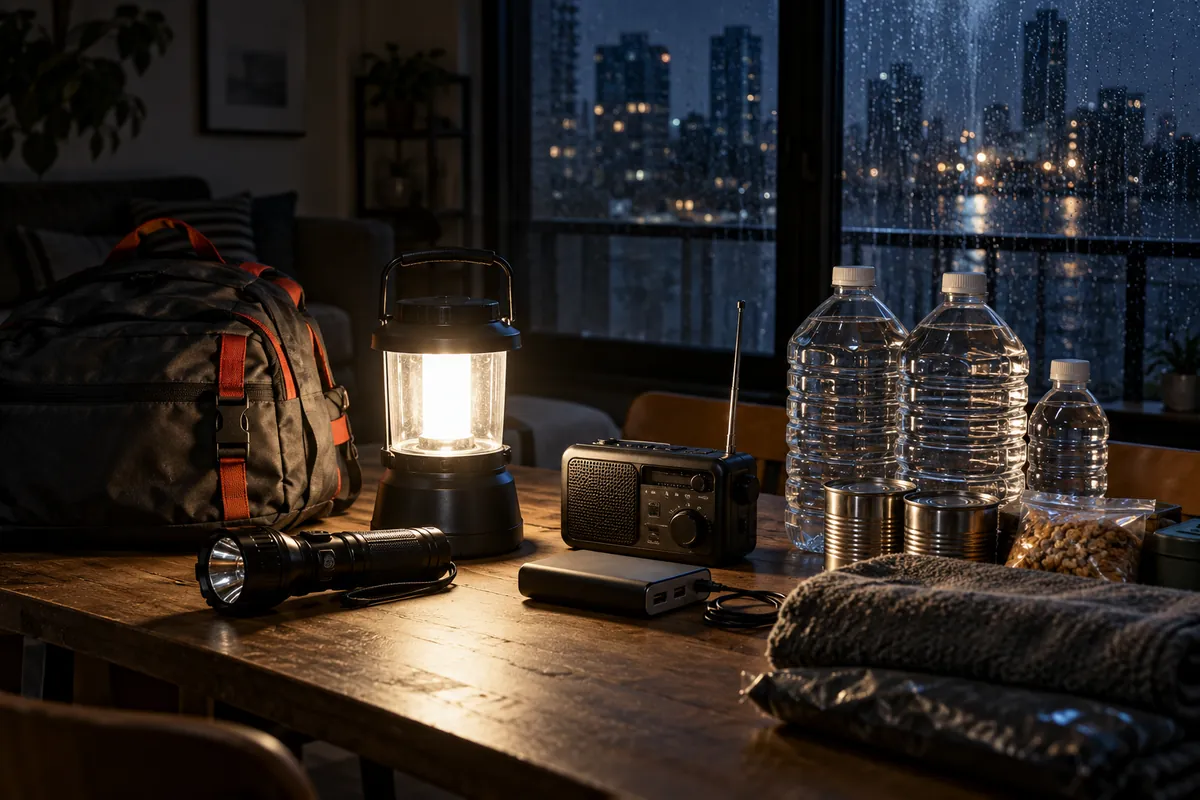
Picture reaching for a flashlight and finding three drawers of everything except the flashlight. Then the power bank turns up, but its cable does not fit your phone. My recommendation is to resolve those small frustrations first: one reachable light, a charging setup you have checked, and printed contacts. After that, look at building access and medical needs. A box of supplies cannot answer those questions for you.
1. Make a compact lighting and communication kit
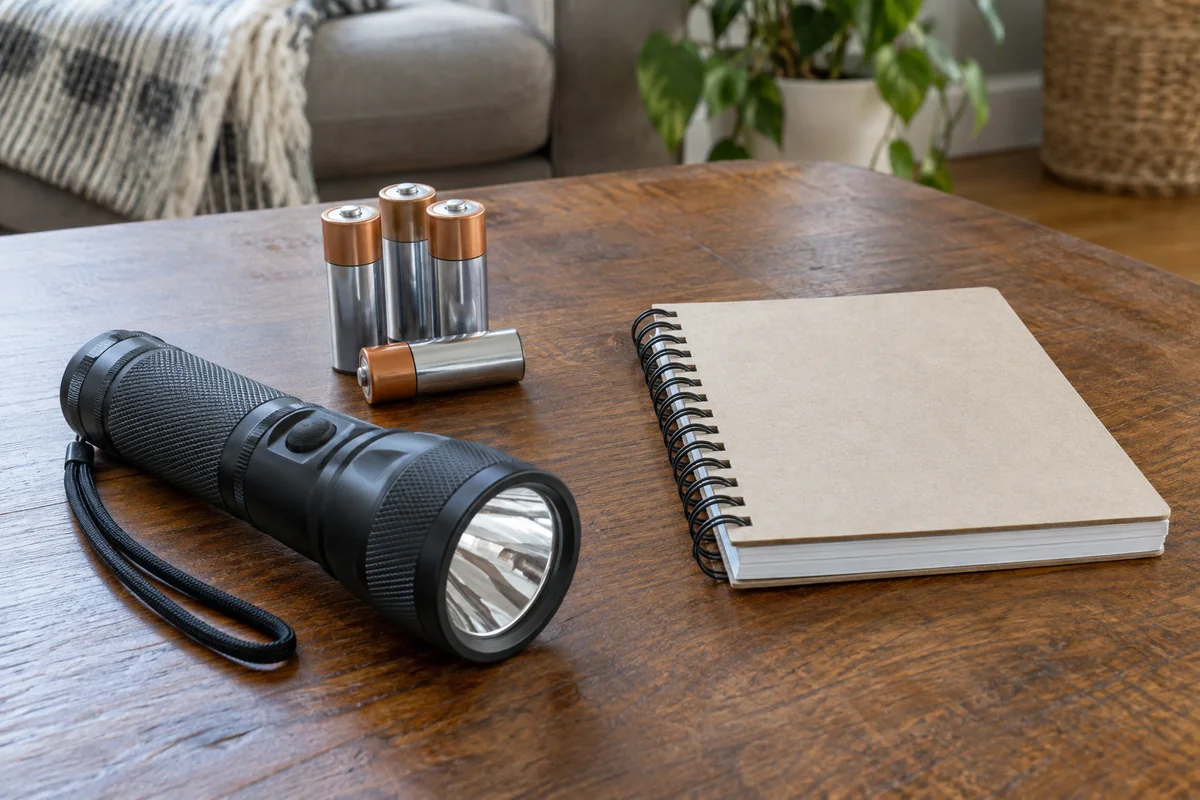
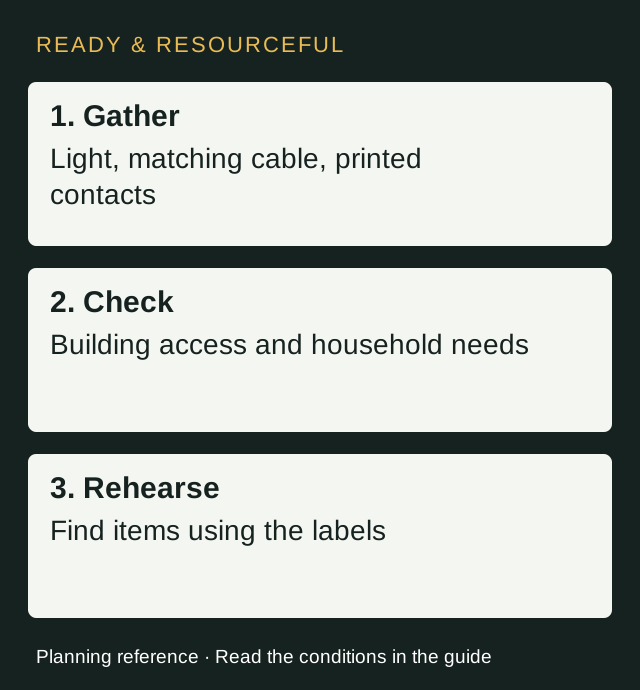
Keep the flashlight or headlamp, its correct spare batteries, a charged power bank and the matching cable in an accessible place. Plug the cable into your actual phone before calling the setup ready. Add a printed contact sheet for your utility, building manager, household contacts and local emergency number. Decide where the light belongs after dark, and make sure other household members know that location.
2. Ask the building questions now
Find out which systems depend on utility power: elevators, door access, water pumps and common-area lighting. Ask management about backup arrangements and accessible evacuation assistance. Do not assume an elevator or electronic entrance will keep working. Identify your usual exit and an alternative allowed by the building plan.
3. Check household needs
Write down anything that cannot simply wait for power to return. A person using powered medical equipment needs a plan agreed with their clinician or equipment supplier. Include pets, children and anyone who may have difficulty using stairs. Decide who you will contact and where you can go if the apartment becomes unsuitable.
4. Avoid unsafe backup methods
CDC advises against candles where flashlights are available and warns against using fuel-burning equipment indoors. Generators belong outdoors, at least 20 feet from doors, windows and vents. An open window is not a substitute for safe placement. Do not improvise an apartment generator setup or connect equipment to household wiring yourself. [CDC guidance]
5. Prepare food and water separately
Keep drinking water available and choose foods you normally eat that do not require cooking. Read storage instructions; a food that is shelf-stable unopened may require refrigeration after opening. Plan manageable portions to reduce leftovers. Use the linked food-safety guide for refrigeration decisions, rather than judging safety by smell.
Practice before a disruption
Walk through the plan in daylight without switching off critical equipment. Find the flashlight, locate the printed contacts and check the charging cable. If anything is hard to find, move it or improve the label. Record the next review date in the supply tracker. This short exercise helps reveal gaps before you need the kit.
Apartment outage planning table
| Need | Prepare before the outage | Check it works |
|---|---|---|
| Lighting | Place a flashlight where it can be found in darkness | Test the light and confirm its battery type |
| Communication | Keep the power bank, cable and printed contacts together | Charge your actual phone with that cable |
| Building access | Ask management about doors, lifts and emergency assistance | Identify permitted exit routes |
| Household needs | Record pet, child and medical requirements | Agree on a fallback location and who to contact |
Suggested planning format. Examples describe a proposed arrangement, not a completed or tested project.
Planning example: a renter keeps the light and contact sheet in an accessible drawer, charging equipment in a labeled pouch, and food and water in suitable separate storage. This illustrates organization, not a complete emergency kit or a tested layout.
What to put in an apartment power outage kit
Use this as a starting inventory, then adapt it to the people in your household. Keep food and water in their appropriate storage rather than squeezing everything into the same box. The important question is whether you can find and use each item.
| Group | Items to gather | Check before relying on them |
|---|---|---|
| Light | Flashlight or headlamp; compatible spare batteries | Test the switch and label the battery type. |
| Phone power | Charged power bank and matching cable | Connect your actual phone; follow the charger instructions. |
| Information | Printed contacts, building instructions, pen | Include utility reporting information and an agreed household contact. |
| Food and water | Suitable stored water; familiar no-cook foods | Check dates, dietary needs and whether a can opener is required. |
| Individual needs | The supplies identified in your household plan | Confirm arrangements for children, pets and anyone needing assistance. |
Keep the power bank and its cable together, and write down where the larger supplies live. Then ask another household member to find the light and cable using only your labels. Any confusion is useful feedback: change the label or location now. This is an organization check, not a claim that the kit has been product-tested or that a battery will last a particular number of hours.
Questions to ask your building manager
A renter has less control over common systems than a homeowner. Get answers while the building is operating normally, and record the date and the person who answered. If management provides written procedures, keep a copy with your contacts.
- How do residents enter and leave if electronic access loses power?
- What does the building plan say about elevators and stairs?
- Do water service or common-area lights depend on backup power?
- Who should residents contact about an outage or an access problem?
- What arrangements apply to someone who needs evacuation assistance?
Do not infer an answer from what happened in a different building. Ask for clarification if the procedure is unclear. Leave medical details out of a general shared inventory; keep a specific care plan with the people who need it.
A renter example: organize before buying
Imagine that you already own a working flashlight and phone power bank, but neither has a consistent home. Put the light in a reachable drawer, keep the cable with the bank, and add a printed contact sheet. Then list the unanswered building questions. This hypothetical example separates a storage problem from an information problem; neither automatically requires a new purchase.
If you later consider a power station, write down the devices you need to support and check their requirements against documented specifications. Capacity numbers alone do not establish real runtime. The food-safety reference and apartment water-storage guide cover those separate decisions.
Common planning mistakes
- Buying backup power before identifying the devices you need to support.
- Assuming elevators, water pumps or electronic access will keep working.
- Packing a charging cable without checking compatibility.
Your action checklist
- Test an accessible battery light.
- Test your phone and charging cable together.
- Print essential contacts.
- Check building access and evacuation arrangements.
- Review water and no-cook food needs.
- Arrange a specific plan for powered medical equipment.
- Record a review date.
Download the plain-text checklist
The download includes the guide link and references. Keep a local or paper copy if you may be without internet access.
Questions about this guide
Do I need to buy a power station first?
No purchase is required to begin planning. Identify essential equipment, its requirements and your building’s restrictions first. A purchase decision needs the actual device specifications; we do not promise a runtime here.
Can this checklist replace my building’s emergency plan?
No. Use it to organize supplies and questions. Building procedures, local emergency instructions and an individual medical plan take priority.
References
Related guides
Continue your household plan
Plan bathroom use during an outage
Check whether your toilet can flush without power, including water supply, pumps and wastewater restrictions.