
A photograph of NATO representatives in Kyiv can carry several messages at once: support for Ukraine, military cooperation and concern about European security. It cannot, on its own, tell a reader that collective defence has been activated or that a wider war is scheduled to begin. Understanding that distinction is especially useful when the same news cycle contains warnings about sabotage, drones and hybrid threats.
This explainer separates the documented October 2026 visit from the rules that govern NATO's response to security concerns. It answers the questions readers encounter in headlines: what Article 4 means, how it differs from Article 5, why civilian resilience belongs in the discussion, and how to distinguish a statement of readiness from an operational decision. The sources were checked on October 8, 2026. Our interpretation is identified where it goes beyond summarising an official statement.
In this article
What happened during NATO's Kyiv visit?
According to NATO's October 7 account, Admiral Giuseppe Cavo Dragone and the military representatives of all 32 allied countries visited Kyiv on October 6. The delegation discussed Ukraine's military priorities, lessons from newer forms of warfare and the alliance's preparedness. Meetings included a NATO-Ukraine Council format with Ukrainian defence staff.
NATO also reported visits to sites involving air defence, drone warfare and unmanned ground systems. Cavo Dragone reaffirmed support for Ukraine and referred to Russia's hybrid activities in NATO countries. The visit demonstrates NATO’s continuing cooperation with Ukraine. I would not read it as the activation of Article 5: no collective-defense decision or newly approved combat operation was announced.
Our reading is that the visit documents cooperation and a public signal of support. It does not provide a timetable for escalation. Readers should preserve that boundary even if they consider the broader security situation serious. A meeting can be significant without supplying an answer to every question about future conflict. Its stated agenda is a stronger basis for interpretation than a dramatic caption attached to a photograph.
Why the Military Committee matters
NATO describes its Military Committee as a link between political decision-making and the military structure. Its role includes providing consensus-based advice on military policy and strategy to the North Atlantic Council, and direction to the alliance's strategic commanders.
That institutional role helps explain why a committee visit is meaningful. Military representatives can discuss practical needs and lessons within the alliance's advisory structure. It also explains why the visit should not be treated as a substitute for a political announcement. A description of military discussions and an announcement authorising a particular action are different kinds of evidence.
When reading the next report, look at which body is speaking. Is the source a military committee, the Secretary General, a national government or the North Atlantic Council? Then identify the verb: advising, discussing, supporting, approving or deploying. Those distinctions often tell you more than the strongest adjective in the headline. We can distinguish those public actions without assuming access to private deliberations.
NATO Article 4 explained
NATO's public explanation of Article 4 says a member can bring a security concern to the North Atlantic Council for consultation. The treaty provision concerns threats to a member's territorial integrity, political independence or security. It provides a way for allies to discuss the situation together.
For a reader, the key word is consultation. A report that an ally has requested talks should be understood first as a request for collective discussion. It does not, by itself, establish that a particular military response has been approved. The seriousness of the concern and the outcome of the discussion need their own reporting.
A useful hypothetical distinction is a country saying it wants allies to examine a threat, compared with an alliance announcing a defined response. The first is a step in consultation; the second describes an outcome that needs specific evidence. When coverage skips from concern to an assumed result, return to the official announcement. Ask what was requested, who attended and what, if anything, was decided.
NATO Article 5 explained
NATO's Article 5 explanation describes collective defence in response to an armed attack. It explains that whether an event qualifies must be assessed individually, and that significant cyber or other hybrid attacks can potentially meet that description. The provision is not limited to a conventional invasion.
The same official explanation makes clear that assistance is not one identical, automatic military action by every member. An ally takes the action it considers necessary, which can include armed force. Understanding that wording avoids two opposite errors: assuming Article 5 means a fixed response in every case, or assuming that a hybrid attack could never be relevant to collective defence.
I would separate the threshold for collective defense from the assistance allies choose to provide. First, there must be a determination about the event. Then there are decisions about assistance. A headline using the word attack does not establish the first question, and speculation about possible assistance does not establish the second. Read reports about either with attention to the body making the statement and the evidence it provides.
Article 4 versus Article 5: the practical difference
The North Atlantic Treaty places consultation in Article 4 and assistance following an armed attack in Article 5. Article 3 addresses the development of individual and collective capacity to resist armed attack. Article 1 commits the parties to peaceful settlement of international disputes and conduct consistent with the United Nations Charter.
These provisions concern different functions. Consultation deals with a security concern; collective defence addresses an armed attack; preparedness develops capacity before it is needed. Grouping every reference to the treaty under the phrase NATO goes to war erases those distinctions. It also makes routine reporting harder to evaluate because it treats a discussion, a policy and an action as though they were the same event.
For your next news check, write down the specific provision mentioned and the specific act reported. If a story describes consultation, label it consultation. If it describes readiness, label it readiness. If it describes a decision, identify that decision. This simple exercise is our suggested way to keep a developing story intelligible without becoming an expert in every aspect of alliance policy.
Who makes NATO's political decisions?
The North Atlantic Council is NATO's principal political decision-making body. NATO says members have an equal right to express their views and participate in the consensus on which decisions are based. Its separate consensus explanation says decisions are collective decisions of member governments rather than outcomes of a majority vote.
That does not allow an outside reader to reconstruct private deliberations. It does tell us why a national leader's comment and an alliance-wide decision should be attributed differently. A statement by one government may be important evidence of its position. It should not silently become a statement that all governments have agreed to the same action.
Our editorial test is to look for the scope of the announcement. Who owns the decision, and which countries or institutions does it bind? If a story describes a proposal, preserve that word. If it describes an agreement, look for its stated terms. A careful account can explain uncertainty without dismissing the significance of an announcement or pretending that the whole process is transparent.
What hybrid threats add to the security discussion
Hybrid activity can raise questions about responsibility and scale that a short headline cannot resolve. Our Europe hybrid warfare explainer examines the recent sabotage allegations and EU contingency reporting separately. It distinguishes a reported incident from an intelligence assessment and a plan for responding to a possible scenario.
The distinction I would keep in view is between a possible threshold and an actual decision. Saying that a hybrid attack could be relevant to collective defence is not the same as saying a particular event has met the threshold. A broad warning does not establish a named perpetrator in an individual case. Likewise, a serious incident does not tell readers which institutional response has been agreed unless that response is reported.
A useful way to read a developing story is to separate four questions: what happened, who is responsible, how authorities assess it and what action they have announced. Some answers may be available before others. Resist filling an empty box with an assumption because the overall story feels alarming. The distinction is particularly important when an early account is later corrected or an investigation remains open.
Why civilian resilience appears beside military readiness
NATO's resilience and Article 3 explanation connects civil preparedness with the ability to withstand major disruption. Its seven baseline areas include continuity of government, energy, food and water, movement of people, mass casualties, communications and transport. These are national resilience requirements, not a seven-item household shopping list.
Our interpretation is that civilian systems and military readiness are connected because societies need essential functions to continue. But the level of responsibility matters. A household cannot fulfil a national communications requirement by purchasing a radio, nor can a personal stockpile replace a public water system. Individual preparation is one contribution within a much larger structure.
For readers, the useful translation is to identify dependence rather than claim complete self-sufficiency. Which essential services does your household rely on? What limited backup could you manage? What requires a provider, a care team or a public authority? Writing those answers makes the boundary visible. It also prevents a preparedness article from presenting consumer purchases as a substitute for institutional capacity.
Readiness, exercises and deployments are different
NATO's deterrence and defence overview describes its defensive work and its assessment of the security environment, including Russian hybrid activity. The public framework is broader than any single meeting or exercise. It is context for understanding readiness, not an announcement that every possible response is being used at once.
I distinguish preparation, practice and an operational action when assessing an alliance update. A training event is evidence that participants are practising something. A readiness statement describes a posture or capability. A deployment report needs details about an actual movement or mission. These can be related, but the relationship should be explained rather than assumed from an image or a slogan.
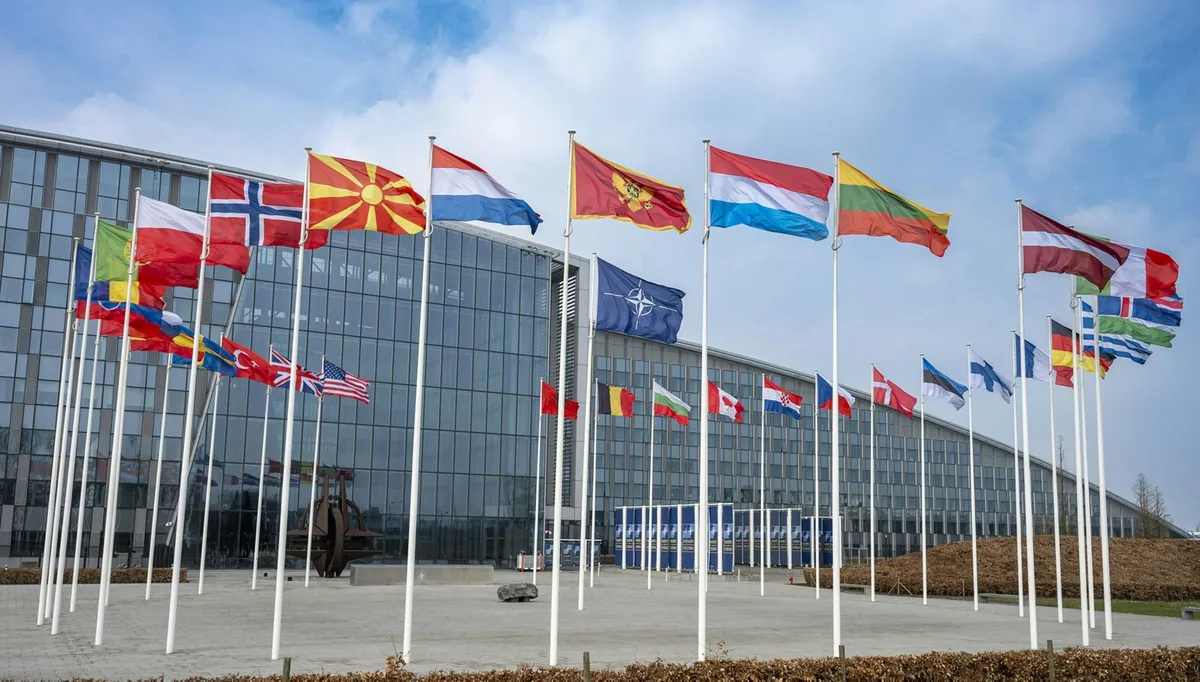
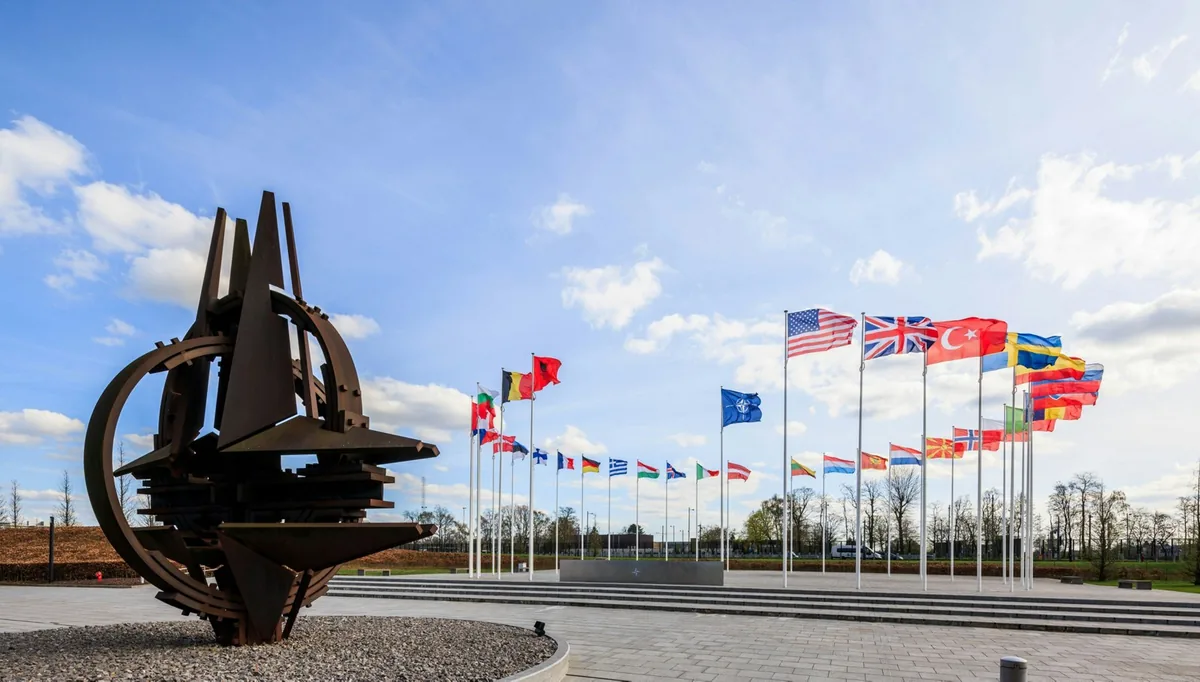
The background photographs here are explicitly dated. They show alliance facilities or symbols rather than the October Kyiv meeting. That choice gives readers an honest visual context without suggesting access to an event we did not photograph. When evaluating coverage elsewhere, make the same check: does the image document the reported event, or is it a file photograph that needs a clear caption?
Support for Ukraine and alliance membership
NATO's Ukraine relations page describes cooperation and Ukraine's aspiration to join. The NATO-Ukraine Council held its inaugural meeting in July 2023. Cooperation through that council should not be confused with admission to the alliance. NATO's formal membership status, rather than an expression of solidarity, determines whether a country is a member.
For readers, this is another place where the language of a headline can compress different relationships. Support, partnership, assistance and membership are not interchangeable terms. An official visiting Kyiv can express strong support without announcing a membership decision. A meeting through a council can develop cooperation without changing the treaty status of its participants.
I look for an actual change of status before drawing a conclusion about membership. If not, explain the cooperation that was described and leave membership claims to evidence about membership. This does not minimise Ukraine's needs or the importance of assistance. It simply keeps the institutional relationship accurate, which is necessary for a useful discussion of collective defence and the meaning of security guarantees.
What should an ordinary household do with this news?
A family cannot decide the outcome of NATO consultations, but it can choose how to review its own plan. Our recommendation is to keep the two levels separate. Follow geopolitical reporting to understand context, and follow the relevant local authority for instructions about immediate safety. Do not treat a treaty explainer as a local alert.
Start with a short household conversation. Who would contact whom if usual communication was unavailable? Where are essential records? What task depends on another person, and has that person agreed to help? These are planning questions, not forecasts about a conflict. They can be answered while the wider situation remains uncertain.
If a supply review is needed, use our 72-hour emergency kit article. It distinguishes a home reserve from a portable evacuation bag and explains why medicines, accessibility and water planning deserve attention. The article's urgency is practical: discover a gap while you can still discuss it calmly. It does not depend on claiming that a particular war scenario is certain to occur.
How to assess the next NATO headline
Read the headline, then find the original announcement. Record the event date and the publication date separately. In the Kyiv example, the visit happened on October 6 and NATO's account appeared on October 7. That one-day difference is ordinary, but it illustrates why a publication timestamp alone does not identify when something took place.
Next, identify the action described. Was there a meeting, a request for consultation, a statement of support or a defined decision? Note what remains unannounced. If a report does not describe a collective-defence decision, avoid supplying one through your interpretation. If it reports a proposal, check whether a later update says the proposal was agreed.
Finally, decide whether the story changes a practical choice for you. A traveller may need destination-specific advice. A household may choose to review supplies. Someone directly affected by an emergency needs current local instructions. Those decisions have different sources and thresholds. Keeping them distinct allows serious security reporting to inform readers without turning every development into the same prediction of escalation.