
A threat to everyday life does not have to arrive with a declaration of war. A damaged facility, an interrupted journey or an unreliable information channel can raise difficult questions long before anyone knows who is responsible. That is why Europe's discussion of Russian hybrid warfare matters to readers who are thinking about preparedness rather than military strategy. The immediate task is to understand what has actually been reported, what officials assess could happen, and which practical decisions belong in your household plan.
For households in Europe, the U.S. and Canada, I would focus on the services a disruption could interrupt: communications, energy, transport and access to essentials. The security developments below were checked on October 8, 2026. They describe allegations, assessments and contingency planning, not a timetable for a wider war. We can take civilian preparedness seriously while keeping that distinction clear.

In this article
What is hybrid warfare?
NATO describes hybrid threats as combinations of military and non-military activity, using both concealed and open methods. Its examples include disinformation, cyberattacks, economic pressure and irregular or regular forces. Such activity can blur the distinction between peace and conflict. NATO says responding is primarily the responsibility of the targeted country, with the alliance available to assist.
That definition is wider than an internet attack and more specific than a general feeling that the world is becoming dangerous. In this article, hybrid warfare refers to coordinated methods intended to undermine an adversary, while an individual hybrid incident is a particular alleged or established action. One suspicious occurrence does not prove an entire campaign, and a campaign assessment does not tell us the identity of every participant in every incident.
For a reader, the practical question is what the term adds to the evidence. Does an authority identify an affected service? Does it explain responsibility? Does it describe an ongoing investigation? If none of those questions can be answered, the label may provide context without giving you an actionable local warning. Keep that distinction when discussing a story with family or sharing it online.
What changed in the October 2026 reporting?
On October 7, a Danish intelligence official said Russia had begun sabotage operations against Danish firms supplying Ukraine. Reuters reported the allegation and the Russian embassy's denial. The official described greater focus on weapons production after broader disruption failed to deter Western support for Ukraine. The allegation remains an intelligence assessment; it does not establish responsibility for every individual incident.
The following day, The New Voice of Ukraine summarised Politico's October 7 account of EU discussions about responding to a hybrid attack causing multiple casualties. It reported talks among ambassadors from all 27 EU countries, including possible emergency teams, financial assistance and public communication. Its account relies on unnamed officials and diplomats; it describes contingency planning rather than an announced attack.
I would read the Danish allegation and the EU discussions as separate developments. One concerns an intelligence assessment of hostile activity; the other concerns preparations for a severe scenario. Together, they put disruption and response capacity at the center of Europe’s security debate. They do not establish that a particular attack has occurred or that the discussed response has been activated.
Why Europe is looking at infrastructure
EL PAÍS reported on October 3 that European governments were strengthening preparations against sabotage, drone incursions and attacks affecting essential services. Its sources warned that an incident could escalate through deliberate action or miscalculation. European institutions are also developing coordinated responses to serious incidents below the level of an armed attack.
Our interpretation is that infrastructure is the bridge between a national security debate and an ordinary household. A reader does not need to understand an intelligence operation to identify dependence on electricity, water, transport or communications. But identifying a dependency is not the same as forecasting its failure. We should not transform the fact that authorities are discussing infrastructure protection into a claim that your own supply will be interrupted this week.
Think in terms of functions rather than dramatic scenarios. How would you receive an official message? Who could collect a child if usual transport was unavailable? Where is the information needed to replace a prescription? Those questions produce a useful list even when the cause of a disruption is unknown. They also avoid the false impression that buying one specialist item addresses every weakness.
Sabotage allegations require careful attribution
The Danish security service's public sabotage assessment explains that physical sabotage deliberately damages equipment or facilities. It assesses increased Russian willingness to use hybrid methods in Europe and describes possible aims including obstructing supplies to Ukraine and weakening political support. It also notes that sabotage can resemble an accident, making investigation and attribution difficult.
There is an important source discrepancy. That undated page says PET was not aware of specific Russian sabotage cases in Denmark. The October 7 Reuters account reports a newer official statement describing operations against Danish firms. We cannot resolve that difference by inventing an incident count or assuming the webpage has been updated. We therefore retain the dates and attribute each statement to its source.
The wider lesson is to distinguish suspicion, official attribution and a finding reached through a legal process. These may be related, but they are not interchangeable. A headline that reports an accusation should preserve the accusation when it is repeated. Where a denial is part of the reporting, readers should see it too. None of that requires dismissing the risk; it requires being precise about the available evidence.
What the EU hybrid toolbox does
The European External Action Service's March 2026 explanation describes an EU hybrid toolbox for coordinating responses. It discusses activities including sabotage, cyberattacks, foreign information manipulation and damage to undersea infrastructure. Its account presents hybrid activity as designed to remain below what might be understood as an act of war.
For readers, a toolbox is a framework for institutional action, not a promise that any disruption will be prevented. Likewise, a proposal for a coordinated response should not be reported as though every operational detail has already been agreed. The distinction between an existing framework and newly discussed arrangements is particularly important in fast-moving news.
Our analysis is that coordination has at least two separate questions: what happened, and how affected authorities should act together. A disagreement about attribution may coexist with agreement that a service needs restoring. A household plan faces a similar separation. You can decide how to contact relatives without first resolving who caused an outage. That is a useful way to act under uncertainty while leaving investigation to the appropriate authorities.
An outage is not proof of an attack
Consider a hypothetical evening in which your broadband stops working. You see a claim online that the problem is sabotage, but your provider has only announced an interruption. The established fact in that example is the service problem. Its cause remains unverified. Sharing the sabotage claim as fact would add certainty that neither the provider nor an investigating authority has supplied.
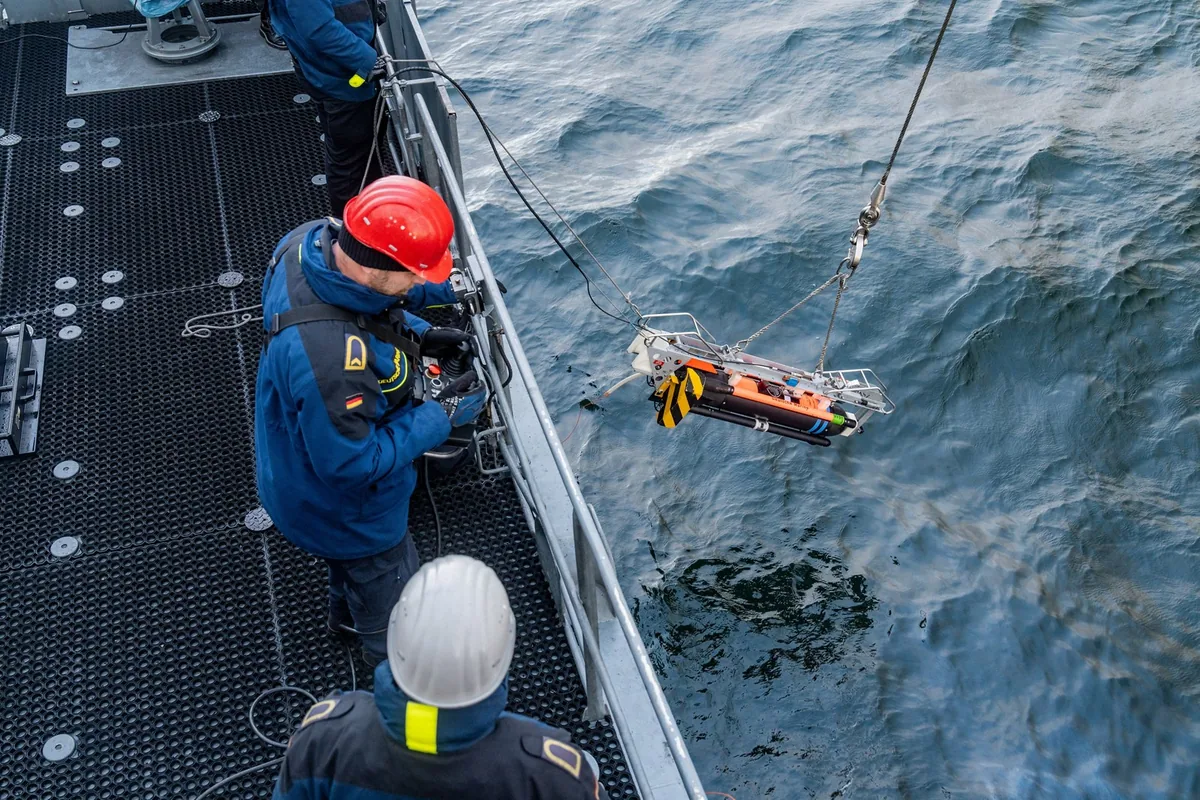
The same reasoning applies to a photograph, a short video or an anonymous message. Ask whether the material has an identified date and place, whether the described incident is the one shown, and whether the attribution comes from reporting or a caption written by an uploader. A real photograph can still accompany an unsupported explanation. That is why the images in this article carry dates and are identified as background photographs.
This is an editorial checking method, not a technical tool for detecting attacks. It helps you decide what to repeat and what to hold back. When immediate safety is at issue, use the current instructions from the relevant emergency service. A compelling explanation of a possible cause should never replace a direct local instruction about what to do.
Communications deserve their own backup plan
The UK government's phone and broadband outage guidance encourages planning with neighbours or the wider community about assistance during a service interruption. It also stresses following emergency-service advice if evacuation is required. This is useful public guidance about an outage; it is not evidence that a particular network is about to be attacked.
Our planning exercise is to remove internet search from one routine task. Write down a contact you normally retrieve from an app. Decide who would receive a short message if another member of the household could not reach you. Find the local source of official updates before there is a problem. Record where the information lives so another person can use it.
Avoid building a plan around a device you have never tested. A power bank may be useful, but its cable must fit and its charge must be available. A radio must be usable by the person expected to listen to it. The household question is whether the backup works in your circumstances, rather than whether an online list calls it essential.
Digital preparedness is part of the picture
CISA's Secure Our World advice promotes four everyday practices: recognising and reporting phishing, using strong passwords, enabling multifactor authentication and updating software. These steps address ordinary online security. They do not allow a household to diagnose a state-linked campaign or defend a national network.
A useful personal review begins with the accounts you would need during disruption. Check that you can reach your email and that your recovery arrangements are current. Decide how you would contact a service provider through a known channel. If an alarming message asks for money, credentials or an unfamiliar download, stop and verify the request independently instead of reacting to its urgency.
This is our recommended way to connect digital habits with preparedness. Keep the task bounded: account access, reliable contacts and careful verification. A household does not need to become a cyber-intelligence team. It does need to avoid introducing a preventable problem while trying to solve another one. The same principle applies to messages that claim to contain exclusive emergency instructions.
A planning exercise for your next disrupted day
Choose one ordinary dependency and write a short alternative. For electricity, that might be locating a working light. For transport, it might be identifying an accessible way to reach a relative. For communication, it might be a paper contact list. Describe what you can do with the resources you already have before deciding that a purchase is necessary.
Then involve the person who would actually use the plan. Can they find the item? Can they read the instructions? Do they know the agreed contact? If your household has more than one person, ask someone else to explain the plan back to you. This is a suggested tabletop exercise, not a prediction of what a real emergency will look like.
Keep the outcome small and verifiable. A page that says where supplies are stored is more usable than a promise to handle every possible crisis. The point of the exercise is to reveal a gap you can address, not to prove that your household is ready for every hazard. Use our apartment power outage checklist for a more detailed review.
Travellers should distinguish news from local instructions
The UK government's overseas emergency guidance advises following local authorities and taking necessary documents and supplies when told to evacuate. This illustrates why a regional security story and an instruction affecting your own journey are different pieces of information.
Our practical suggestion is to check the official advice that applies to your citizenship and destination before making a travel decision. Note the issuing authority, the location covered and the publication or update date. An assessment about Europe as a whole may provide context while saying little about your accommodation, route or immediate circumstances.
Do not use this article as a clearance to travel or as a reason to ignore a warning. Instead, use it to improve the questions you ask. Is there a destination-specific notice? Has the carrier changed its arrangements? Who would you contact if plans changed? Those are concrete decisions that can be reviewed without pretending to know how a geopolitical situation will develop.
What to watch in the next update
The most useful next development would add evidence or an identifiable decision. Look for a named investigation, an official attribution, a change to public instructions, or a clearly described response. A repeated warning may matter, but repetition alone does not establish a new incident. Compare the event date with the date the story was published.
I use three categories when weighing a security update: what is established, what is assessed, and what remains unresolved. Put an intelligence warning in the assessment column unless the reporting also establishes a specific event. Put contingency discussions in the planning column. Keep statements from institutions, journalists and researchers attributed to the people or organisations that made them.
For household action, the threshold is simpler. If there is a relevant local instruction, follow it. If there is no such instruction, use the time to review a sensible preparedness plan. Europe's hybrid-threat discussion gives readers a reason to take that review seriously. It does not justify inventing a countdown or treating every interruption as a hostile operation.
Questions readers ask about Europe's hybrid threat
Does hybrid warfare mean a conventional invasion is about to happen? No. The term describes a range of methods and can appear in assessments of activity below conventional conflict. The reports discussed here do not establish a date for a wider attack. An assessment of possible escalation should retain its uncertainty.
Can sabotage and cyberattacks affect ordinary people? They can be relevant to services people rely on, which is why infrastructure appears in the public discussion. The effect of a particular incident still needs specific evidence. A household should plan for interruption without assuming that every interruption has the same cause.
Should I buy supplies because of these reports? Begin by identifying a gap. Check what you already have, who would use it and how it would fit the plan. Our 72-hour emergency kit guide explains the civilian preparedness baseline and separates necessary household needs from optional product examples.
Where does NATO collective defence fit? It is a separate question from identifying an incident. Read our Article 4 versus Article 5 explainer for the distinction between consultation, collective defence and readiness. Household decisions should continue to follow the instructions relevant to your own location.