A scheduled water shutoff is easier to manage when you turn the notice into a short household plan. The important details are usually ordinary: when the work starts, what water you have, which tasks can wait, where the update will appear and whether the toilet's drain remains usable.
This checklist is for household preparation around a supply interruption. It is not a valve-repair guide or a local outage map. If electricity or wastewater service is also affected, read our primary guide to toilet use during a power outage before treating stored water as permission to flush.
Quick answer: prepare water by task and keep the notice
Before a planned water shutoff, confirm the affected address, start time, expected duration and update contact. Set aside suitable drinking and food-preparation water separately from utility water. Arrange hand hygiene, review individual household needs and check whether toilets may still be used. After service returns, follow the utility's instructions and any continuing advisory before returning to normal use.
The before, during and after checklist
| Stage | Household action | Information to keep |
|---|---|---|
| Before | Read the actual notice and plan essential tasks | Address, time, contact and restrictions |
| Before | Identify drinking water and separate utility water | Quantity, container location and purpose |
| Before | Check toileting, hygiene and assistance needs | Usable option and unresolved questions |
| During | Follow the notice and conserve the available supply | Current update and next check |
| During | Keep food and hygiene arrangements consistent | Which water is suitable for each use |
| After | Read restoration and flushing instructions | Whether restrictions or advisories remain |
| After | Replenish and review the household plan | Used supplies and follow-up tasks |
Download the water-shutoff household worksheet if you want one place for these details. The blanks are deliberate: the service instruction belongs to your utility or building, not to a generic checklist.
Start with the notice, not a neighborhood rumor
Check whether the notice names your building or service area and whether it describes planned work, an emergency break or a water-quality problem. Save the original source. Record the expected duration as an estimate, not a guarantee. If you receive a forwarded message, verify it with the utility or management before reorganizing the household around it.
For renters, ask whether management receives the notice on behalf of the building. Seattle Public Utilities' planned-outage page describes notifying building managers in multi-family properties. That is an example of why the building's communication route matters; your own utility may use a different process.
Write down who will check for updates. Otherwise, several household members may repeatedly look at an old notice while assuming someone else has found newer information. Use one current record with the time checked and the next action. This is a suggested organization habit, not a prediction about how long utility repairs will take.
Separate drinking water from household utility water
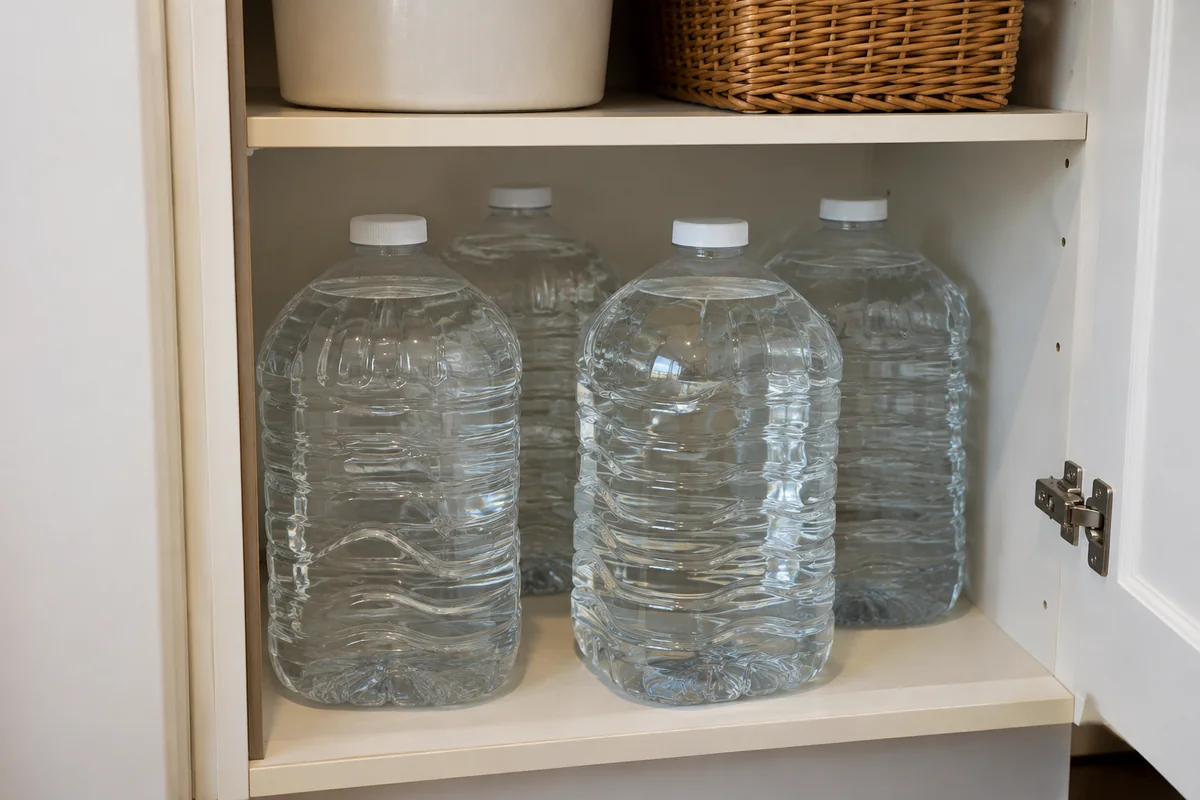
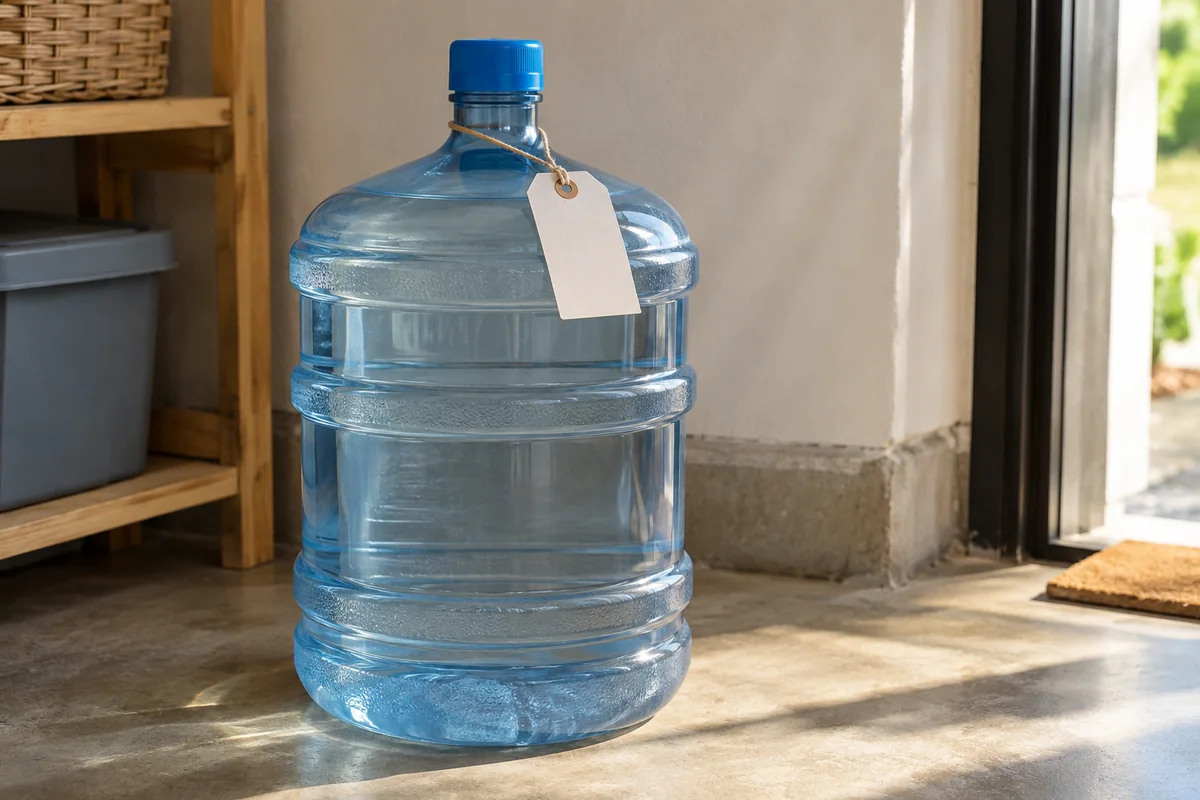
Give each container a purpose. Drinking and food-preparation water should be identifiable without opening every bottle. Utility water for permitted sanitation tasks belongs in a separate arrangement. Do not let a large container's presence create the impression that every gallon is available for every task.
CDC's emergency water supply page recommends at least one gallon per person per day for three days and considering additional needs. That is a broader emergency reserve reference, not a promise that the amount covers unlimited toilet flushing. For a scheduled interruption, plan around the household's actual needs and the current instruction.
Our small-apartment emergency water guide handles longer-term container and storage planning. This article focuses on using that plan during a particular shutoff. Keep any purchase list separate from the water already in the home, and record where the existing supply is accessible.
Prepare for the people who are actually at home
A notice that covers working hours can still affect someone working remotely, a child at home, a visiting relative or a person needing assistance. List who will be present rather than assuming the apartment is empty all day. Ask which essential routines depend on water and which can reasonably be moved outside the interruption.
For an individual medical need, consult the person's existing care plan, clinician or equipment supplier. Do not substitute a general household estimate for water needed by a specific procedure or device. Keep the necessary contact available and identify what must be confirmed before the shutoff begins.
For pets and other household needs, record the water and care supplies that apply to them. Keep the record practical and private. “Confirm the care arrangement before Tuesday” is a useful next task. A copied checklist that says “consider everybody” without assigning an action does not resolve what your household actually needs.
Finish ordinary water-dependent tasks where practical
During normal, safe service, consider whether dishes, washing or a shower can happen before the planned interruption. This is a scheduling suggestion, not a requirement to use excessive water or ignore conservation notices. Do not begin a task that needs continuous supply just as the shutoff is expected to start.
Think about the rest of the day. Choose food that fits the available preparation and cleanup arrangement. Put suitable water for drinking and necessary food tasks where it will be used. Avoid creating a meal plan that quietly depends on running water after the notice says supply will stop.
If electricity might also be interrupted, use our separate food-safety outage guide and apartment blackout checklist. A water shutoff and a refrigerator outage are different problems. The plan should connect them when both apply without assuming that one automatically causes the other.
Check whether the toilet drain remains usable
Ask whether the restriction concerns incoming water alone or includes wastewater use. For a suitable gravity toilet with a confirmed functioning drain, manual flushing may be possible. The manual-flushing guide explains how to approach stored-water use and when to stop.
If there is a sewer restriction, failed pump or suspected sewage backup, do not add water to test the system. Use the power-outage toilet decision guide to separate supply from drainage. A notice about a water main does not answer every question about the building's wastewater arrangement.
Record the current bathroom instruction in plain language. If the toilet cannot be used, check a functioning alternative or the apartment emergency toilet plan. Consider access and assistance, not just whether a facility appears nearby on a map. Confirm availability before relying on a business or another household's bathroom.
Set up hand hygiene before the tap stops
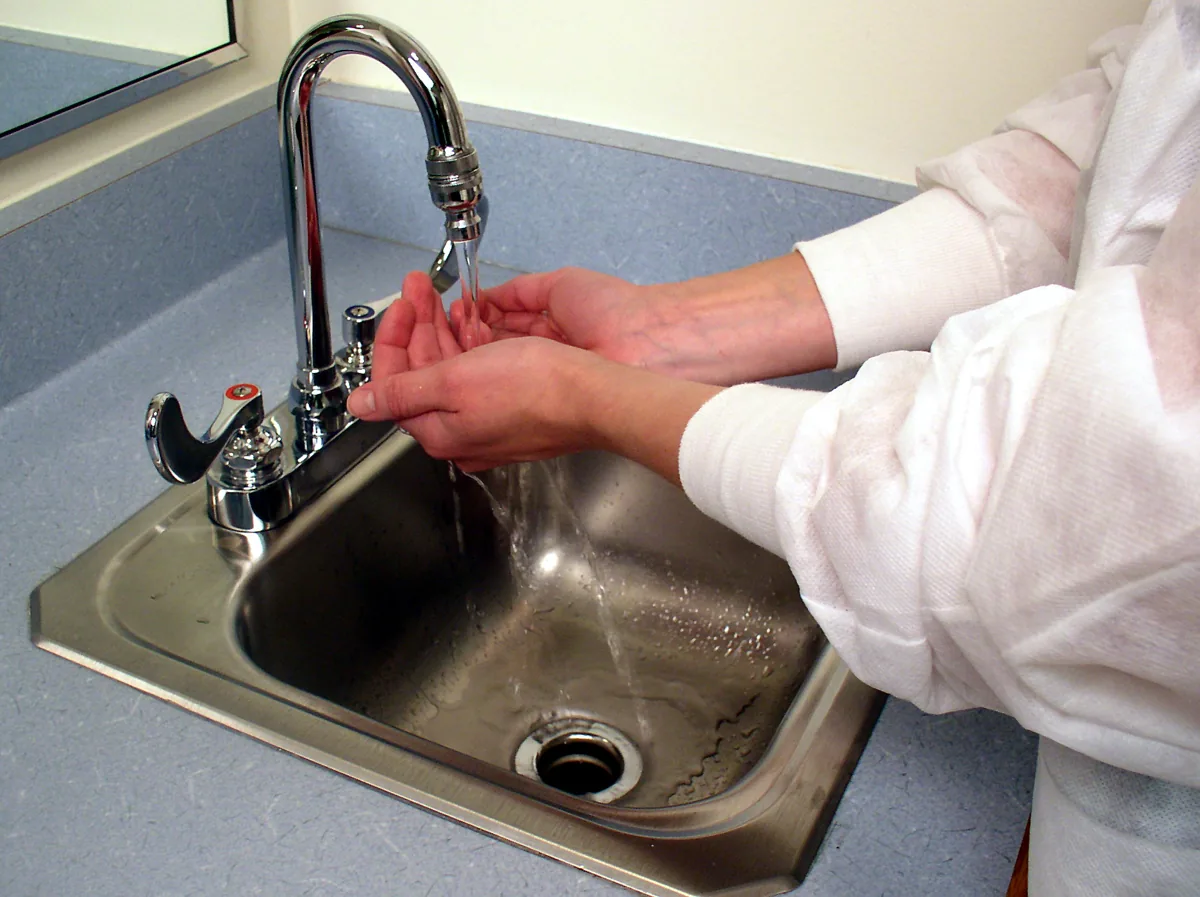
Make soap, suitable water and drying supplies accessible. CDC's emergency hygiene guidance discusses temporary handwashing arrangements and sanitizer when soap and water are unavailable. Follow the current advisory about which water may be used for hygiene.
Choose where the arrangement belongs and explain it to household members. Keep water intended for hygiene distinct from a bathroom flushing bucket or waste materials. A container can be convenient while still being poorly located for the person who needs it. Check reach and access before the interruption, especially where someone needs assistance.
Do not make sanitizer a reason to ignore visibly dirty hands or the details of a water-quality notice. Keep the original health guidance accessible. If an individual care requirement changes the hygiene arrangement, follow that specific plan rather than improvising from a generic household list.
Understand the difference between an outage and an advisory
No tap flow is a service problem. A drinking-water advisory is an instruction about use, and the two can overlap. CDC's advisory overview distinguishes boil-water, do-not-drink and do-not-use notices. Read the actual category and permitted uses.
Save the advisory with the shutoff notice if both apply. A household member should not have to guess whether “water restored” also means “safe for every purpose.” Restoration information and the lifting of an advisory can be separate communications. Follow the issuing authority's instruction about when restrictions end.
If you are unsure, contact the utility or health department. Do not assume a filter, clear appearance or boiling resolves every kind of contamination. CDC's water-treatment overview explains that boiling and disinfecting do not remove fuel or toxic chemical hazards. Use a suitable alternative source and obtain the specific instruction.
Keep building controls out of the household checklist
Know whom to contact for a leak or unexpected interruption, but do not operate shared building equipment because a household checklist mentions water. Valve access and repair responsibility depend on the property. If the situation involves a burst pipe or immediate danger, use the appropriate emergency contact and follow the property's established procedure.
For a planned shutoff, ask management what residents need to do and what they should leave alone. Write the instruction rather than adding a generic “turn everything off” step. A checklist that invents a control action can be worse than a short list that names the correct responsible person.
Equipment that uses water may have its own instructions for interrupted supply and restart. Keep the actual manuals available. This article does not prescribe adjustments to water heaters, pumps or unfamiliar appliance controls. The household task is to identify the requirement and contact, not to guess a setting during a service interruption.
While water is off, use one current household record
Keep the original notice, available supply and next update together. Mark what has changed: an extended outage estimate, a new advisory, a bathroom restriction or an assistance need. Use observation rather than diagnosis. “Cold tap has no flow” is information; “the entire municipal system is broken” is a conclusion you may not be able to support.
Record who has checked the official update and when. If you use a group message, include the source rather than just a paraphrased rumor. Retain an offline copy if internet or phone service may be unreliable. Do not repeatedly contact an emergency line for routine updates when the utility supplies a normal information channel.
Review the plan if the interruption lasts longer than expected. Decide whether the remaining water and bathroom arrangement still fit the household. Ask for assistance or a suitable alternative when they do not. A restoration estimate should not prevent you from addressing a practical need that has already become difficult.
When service returns, follow the restoration instructions
Read the utility's instructions before running fixtures or returning appliances to normal use. A planned interruption can come with a specific flushing procedure, and a continuing advisory can limit what the restored water is used for. Follow your utility's details rather than applying another city's timings automatically.
If the water looks different, the pressure is unusual or the instructions are unclear, use the utility's normal response contact. Describe the observation and the affected address. Do not treat color alone as a test of safety, and do not assume a clear glass means an advisory has ended.
For a multi-family building, check whether management has a separate restoration message. The building may need to coordinate tasks even after utility service resumes. Keep unresolved questions on the household record until they are answered; do not erase them because the tap briefly produces water again.
A fictional six-hour shutoff plan
Imagine a fictional household receives a notice for maintenance from nine in the morning until three in the afternoon. One adult works from home. The household confirms the address and update contact, sets aside suitable drinking water, chooses an uncomplicated lunch and asks management whether toilets may be used with stored utility water.
Management confirms the current bathroom instruction. The household records it, puts the utility container and hygiene supplies in their agreed places, and identifies a nearby functioning alternative if conditions change. Nobody claims that the six-hour estimate guarantees the water will return at three. One person checks the official update at an agreed time.
After restoration, they follow the actual utility instruction and verify whether any advisory remains. They note what was used and what was hard to find. This example shows the organization of a plan; it is not a real incident, a forecast or a tested response protocol.
Keep the bathroom decision with the shutoff notice
Attach the printable bathroom plan to your water-shutoff worksheet. Record supply and drainage separately: a water-service notice may not address a building wastewater pump. Keep the original notice, the time checked and the next unresolved question together so another household member can find the same instruction.
Questions about preparing for a water shutoff
Should I fill the bathtub?
Check whether your utility recommends that option, whether the water is suitable for the intended use and whether the household can manage it safely. Keep any utility-water reserve distinct from drinking water. An open tub also needs attention to household access and safety.
Can I flush while the water is off?
Sometimes, if the toilet is suitable, water is available and the wastewater route is usable. Start with the primary toilet decision guide and use the manual-flushing instructions only when appropriate.
Do I need to buy a special kit?
Not to begin planning. Read the notice, identify suitable existing supplies and record the missing tasks. Purchase decisions should follow the household's actual needs, not replace them.
What should I keep for the next interruption?
Keep the useful contacts, container locations, individual needs and unresolved questions. Our free checklist hub includes a supply-location worksheet that can make those details easier to find without creating another account.